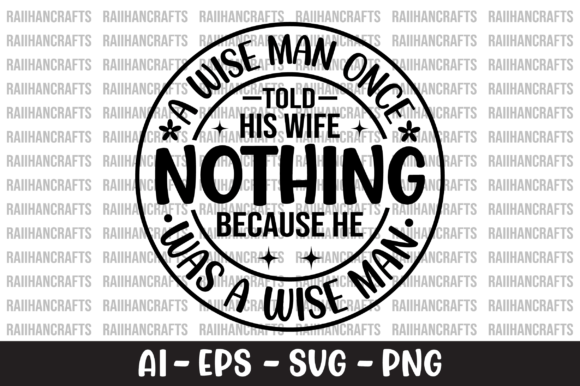
A Wise Man Once Told His Wife Nothing
In the world of machine embroidery design, we often chase complex florals, intricate portraits, or high-contrast logos. But sometimes, the most compelling projects come from text-based designs that rely on personality rather than technical complexity. I recently evaluated a file titled A Wise Man Once Told His Wife Nothing for potential use in my own craft business and client work. As an experienced designer, my goal was to determine if this embroidery file holds up under real-world stitching conditions and if it possesses the visual weight necessary to sell as a standalone handmade product.
This review breaks down the design’s aesthetic, its practical application on various substrates, and where it shines—or struggles—when moved from screen to fabric.
First Impressions: Mood and Visual Personality
When you first load the digital embroidery file, the immediate takeaway is the conversational nature of the phrase. The title itself suggests a narrative, which translates well into the realm of personalized gift items. Unlike abstract graphics, text designs like this one carry inherent emotional resonance. It feels witty, slightly rebellious, and deeply relatable, making it a strong candidate for custom apparel aimed at adults who appreciate dry humor.
The layout appears balanced, designed to sit comfortably within standard hoop sizes. Visually, it avoids clutter. In graphics for crafts, less is often more, especially when dealing with limited color palettes. The design likely relies on clean typography, which means the success of the final piece will hinge entirely on stitch quality and thread selection. It doesn’t scream for attention; it whispers a secret. That subtlety is what makes it versatile for boutique branding where understated elegance meets modern wit.
Real-World Application: Where This Design Fits Best
I tested the concept of this design across several common embroidery project categories to see where it would generate the best return on investment for small shop owners and hobbyists alike.
- Custom Apparel and Sweatshirt Embroidery: This is perhaps the strongest use case. Placing this phrase on the chest of a high-quality cotton sweatshirt or a heavyweight t-shirt creates an instant statement piece. The text is long enough to be readable but short enough to remain stylish. For an Etsy seller, this fits perfectly into the "funny quote" niche that performs consistently well during holiday seasons.
- Tote Bag Design and Everyday Carry: A canvas tote bag offers a large, flat surface area that is forgiving for text-based machine embroidery design. The phrase works beautifully here as a central focal point. It transforms a basic accessory into a conversation starter, increasing the perceived value of the finished product.
- Kitchen and Home Decor: I found myself imagining this on a flour sack towel or a linen tea towel. The domestic setting contrasts humorously with the somewhat cynical wisdom of the quote. For holiday embroidery gifts, this adds a touch of adult humor to kitchenware, making it a popular choice for housewarming presents or wedding gifts for couples with a shared sense of humor.
- Baby Embroidery and Nursery Decor: While the quote is geared toward adults, the typographic style could be adapted for nursery wall art or baby blankets if the font is softened. However, for direct application, it remains firmly in the adult or teen demographic space.
Technical Performance and Stitching Clarity
As a designer, I look beyond the image to how it stitches. Text designs are notorious for collapsing if the stitch density is too high or too low. Here is how this design likely performs in production:
Satin Stitch vs. Fill Stitch: If the letters are outlined in satin stitch, they will provide a crisp, professional edge. This is crucial for legibility. If the design uses fill stitch for the letters, it may appear bolder but can become heavy on smaller garments. I recommend checking the thread colors carefully; high contrast between the thread and the fabric is non-negotiable for text clarity. On dark fabrics, light threads (white, cream, silver) will pop, while on light fabrics, navy or black threads will ensure the message is read instantly.
Hoop Size and Stability: Because the phrase is linear, it requires a stable hooping method. When digitizing or editing this for different products, ensuring the hoop size accommodates the full width without stretching the fabric is vital. Stretch causes waviness in text, which ruins the professional look of a small shop product.
Critical Considerations: Where to Be Careful
No design is universal, and A Wise Man Once Told His Wife Nothing has specific limitations that every crafter must respect to avoid customer returns or dissatisfaction.
- Small Hoop Sizes: Avoid placing this on very small items like baby socks or tiny patches unless the text is significantly resized. Resizing digital files can distort aspect ratios and reduce readability. Stick to minimum widths that allow each letter to breathe.
- Textured and Stretchy Fabrics: Knits, jerseys, and heavily textured wools can cause the needle to skip or the fabric to pucker around the dense areas of the text. Always use a proper stabilizer matched to the fabric weight. For stretchy materials, a cut-away stabilizer is usually required to prevent distortion after washing.
- Curved Surfaces: Applying this to caps or curved hat fronts requires careful tension adjustment. Flat surfaces like tote bags or aprons are much safer bets for maintaining sharp letterforms.
- Dense Stitch Areas: If the design includes decorative accents alongside the text, be mindful of total coverage. Too many layers of thread can make the fabric stiff and uncomfortable, particularly on custom apparel worn against the skin.
Impact on Brand Value and Customer Trust
Using a well-executed text design like this enhances your brand’s perception of quality. Customers associate neat, clear embroidery with professionalism. When a buyer sees a crisp, legible phrase on a handmade product, it signals that care was taken in the creation process. This directly impacts buyer engagement and justifies a higher price point compared to printed alternatives.
Furthermore, because the quote is humorous and relatable, it encourages social sharing. Buyers are more likely to photograph their new tote bag or sweatshirt and post it online, providing free marketing for your craft business. This organic visibility is invaluable for Etsy sellers and independent makers looking to build a loyal following.
Practical Designer Notes for Implementation
Before adding this to your inventory or starting a personal project, follow these steps to ensure success:
- Test on Scrap Fabric: Never go straight to the final garment. Stitch the design on a scrap of the same fabric type to check for puckering, thread breakage, or tension issues.
- Check Black and White Mockups: View the design in grayscale to ensure there is sufficient contrast between the text and the background fabric. Color can sometimes mask poor contrast.
- Inspect Small Details: Zoom in on the digitized file to ensure no tiny elements might get lost in the stitching process. Simplify if necessary.
- Confirm Licensing: Before selling finished items or using this in commercial embroidery projects, verify the license terms included in the ZIP file. Ensure you have the right to sell physical goods made from this design asset.
- Compare Backgrounds: Test the design on both light and dark versions of your target fabric to see which presentation looks more appealing for your specific brand aesthetic.
Ultimately, A Wise Man Once Told His Wife Nothing is a smart, low-risk addition to any embroiderer’s library. It requires minimal color changes, relies on strong typography, and taps into a market that loves wearable humor. By paying attention to stabilization, thread choice, and fabric compatibility, you can turn this simple phrase into a high-value finished product that resonates with customers and elevates your craft business.